Andreas Glöckner

Social psychology · Judgment and decision making · University of Cologne

Prof. Dr. Andreas Glöckner

How we decide: with gut, with head, and with each other.

I study how people judge and decide, when they trust each other and cooperate across groups and nations, and what holds a society together. From this research I derive recommendations for policy, the judiciary, organizations and science: for fair decisions, more trust and social cohesion.

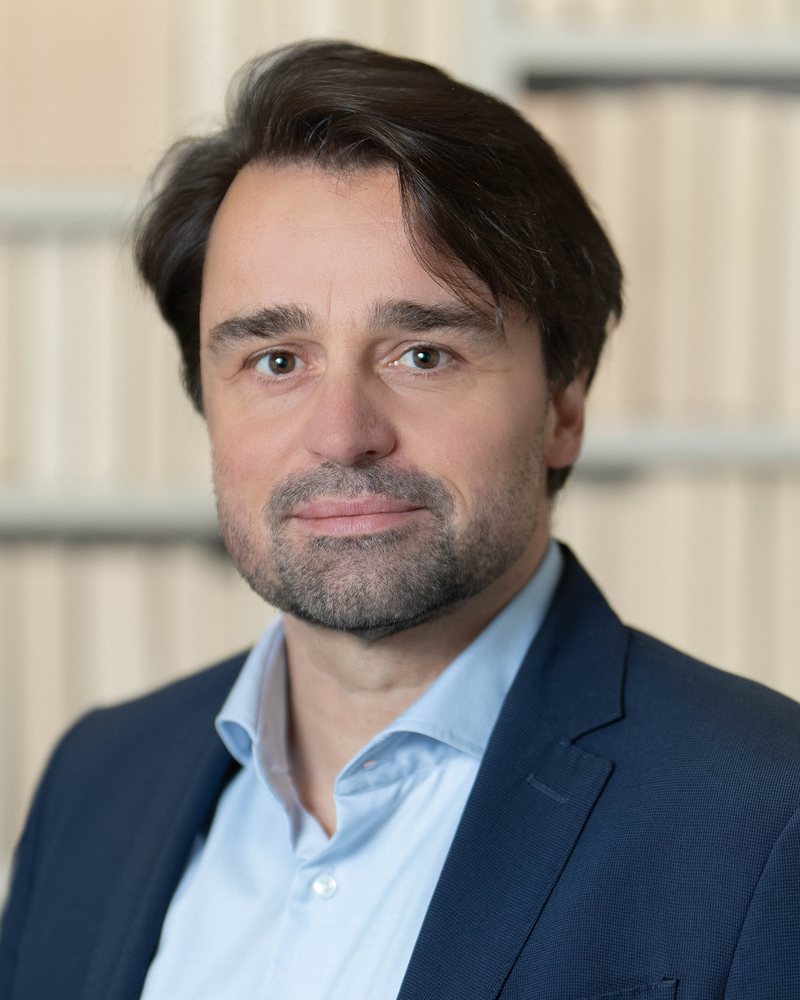
Portrait of Andreas Glöckner

Deciding as a search for coherence: in the parallel constraint satisfaction model, cues activate two options at once until one coherent interpretation wins. Click to replay.

since 2018
Co-Editor-in-Chief, Judgment and Decision Making
2017–2019
President, European Association for Decision Making
126
peer-reviewed articles, including Science, PNAS and Psychological Review
22,926
citations, h-index 54 (Google Scholar, Oct 2026)
€3.5m
research funding raised, including from the DFG, the Max Planck Society and the GIF
Research

Judgment and decision making in social and economic contexts

My group at the Social Cognition Center Cologne at the University of Cologne combines basic research with application. We work with experiments, eye-tracking, computational models and large international studies.

Intuition

Intuition and decision processes

Intuition is more than a vague gut feeling. The brain processes many pieces of information at once, automatically, and looks for a coherent overall interpretation. We model these processes with neural network models and test them with eye movements, decision times and confidence ratings.

Applied to: judicial and lay-judge decisions, leadership decisions, decisions under risk

  • Glöckner & Witteman (2010), Thinking & Reasoning
  • Glöckner, Hilbig & Jekel (2014), Cognition
  • Forst & Glöckner (2026), Psychonomic Bulletin & Review
Trust · Cooperation

Trust, cooperation and social cohesion

Trust and cooperation are social capital: they make communities and institutions work. We study when people share, trust, follow rules, punish or bribe, in incentivized experiments and studies with participants from up to 90 societies, and how social norms and stereotypes shape cooperation across borders.

Applied to: anti-corruption, social cohesion, international cooperation, fairness and discrimination, solidarity in crises

  • Dorrough & Glöckner (2016), PNAS
  • Dorrough, Köbis, Irlenbusch, Shalvi & Glöckner (2023), PNAS
  • Simpson, Eriksson, … Glöckner, … Van Lange (2026), American Sociological Review
Theory · Methods · AI

Better science

Many psychological theories are too vague to be truly tested. I develop methods for precise theory specification, advocate for open science, and use machine learning as a benchmark for how well theories predict human behavior.

Applied to: research policy, quality standards, AI as a sociotechnical system

  • Glöckner & Fiedler (2025), Zeitschrift für Psychologie
  • Glöckner, Jekel & Lisovoj (2024), Decision
  • Open Science Collaboration (2015), Science
Policy & society

Research for policy and society

Trust, cooperation and fair decisions are a society's social capital. They hold it together and make institutions work. I translate research findings into concrete recommendations for policy, the judiciary, public administration and science.

Fairness

Fair exams in the judiciary

Study on gender and origin effects in the grading of state law exams in North Rhine-Westphalia. The findings were taken up by various organizations.

Read the paper ↗
Corruption

Bribery is contagious

Experiments in 18 countries show that people bribe mainly when they expect others to do so. Prevention should therefore target shared expectations and norms.

Read the paper ↗
Cohesion

Norms, trust and solidarity

Comparative studies in up to 90 societies on social norms, sanctions and helping, including during crises such as the COVID-19 pandemic.

Read the paper ↗
AI

AI as a sociotechnical system

Position paper of the Social Psychology Section of the German Psychological Society on how artificial intelligence changes human judgment, trust and living together (Psychologische Rundschau, 2026).

Read the paper ↗
Science

Reliable research

Recommendations for quality, replicability and transparency in social psychology, and five proposals for more precise theories.

Read the paper ↗
Talks

Talks and knowledge transfer

I speak at academic conferences, in training for the judiciary and public administration, and at events hosted by organizations, in German or English. I also advise selected organizations on personnel selection and decision processes.

Recent talks

  1. 10/2026 Keynote How to Analyze and Improve Theory Specification in Psychology: the Many Theorists Collaboration First Annual Meeting of the Theory Methods Society, Tilburg
  2. 10/2025 Keynote Psychology of Decision Making: How People Make Decisions IDeA Workshop, DIPF Leibniz Institute, Frankfurt
  3. 04/2025 Talk Modeling Cross-National Social Preferences Cooperation Colloquium (online)
  4. 09/2024 Keynote Methodological Standards in Social Psychology: Achievements and Future Challenges SoDoc & Post-Doc Workshop, German Social Psychology Section, Hagen
  5. 04/2024 Talk Modeling Cross-National Social Preferences CREED, University of Amsterdam
  6. 07/2022 Keynote Big data and quick data: consequences for efficient science Symposium “Quick Data or Big Data?”, University of Graz
Keynotes include
  • Pfizer
  • Bremen Business Days
  • DGFP HR Congress
  • German Defence Lawyers' Conference
  • DIPF Leibniz Institute
Judicial training
  • German Judicial Academy
  • Judicial Academy NRW
  • Higher Regional Court of Hamm
  • Hanseatic Higher Regional Court, Hamburg
  • Higher Regional Court of Celle
  • Regional Labour Court Hamm
Consulting (selection)
  • Deutsche Lufthansa AG
  • Jurafuchs
  • justplan GmbH
  • Globalpark GmbH
MediaFor journalists and the curious

Media inquiries and coverage

I provide scientific context on decisions, intuition, cooperation and AI, in German and English, for print, radio, TV and podcasts.

  • Gut decisions and intuition
  • Decision traps and biases
  • Cooperation, solidarity and norms
  • Corruption and bribery
  • AI and human decision making
  • Fairness in exams and assessments
  • Risk perception in crises
  1. 10/2025 WirtschaftsWoche Gut over evidence? When bosses should trust their feelings
  2. 07/2025 SZ Magazin Do I want a child? What helps with the decision
  3. 07/2025 heise online AI model “Centaur” predicts human behavior
  4. 07/2025 Der Tagesspiegel Comment on the AI model “Centaur”
  5. 05/2025 Frankfurter Allgemeine Sonntagszeitung Mango or dragon fruit
  6. 05/2024 DEB Seminar Modeling Social Preferences in Cross-National Interactions
  7. 07/2023 Express Cologne, why are you so dirty?
  8. 06/2023 Podcast FotoPsychoLogisch Intuition and photography
  9. 03/2023 Süddeutsche Zeitung How people get tangled up in misjudgments

Expert profile at Science Media Center Germany Press inquiries by email

Latest

Recent posts and videos

New studies, talks and thoughts on decision making, from my posts on LinkedIn and my YouTube channel.

More on LinkedIn Visit the YouTube channel Xing

PublicationsFor researchers

Selected publications

  1. Glöckner, Diller, Froehlich, … & Rudert (2026). Psychologische Rundschau Künstliche Intelligenz als soziotechnisches System: Eine Perspektive der Fachgruppe Sozialpsychologie Position paper of the Social Psychology Section: AI changes how people judge, trust each other and live together.
  2. Simpson, Eriksson, … Glöckner, … Van Lange (2026). American Sociological Review How norms depend on the presence and status of observers: The relational contingency of everyday behaviors in 90 societies Across 90 societies, what counts as appropriate in everyday life depends strongly on who is watching.
  3. Clemens, Orifici, Froehlich, Glöckner & Dorrough (2025). PNAS Nexus Beyond ingroup favoritism: Investigating cross-national social preferences across 25 nations How generous people are toward other nations depends not only on “us versus them” but on similarity, economics and shared history.
  4. Glöckner & Fiedler (2025). Zeitschrift für Psychologie How to improve theory specification in psychology: A review and five policy suggestions Psychological theories are often too fuzzy to test. Five concrete proposals to change that.
  5. Forst & Glöckner (2026). Psychonomic Bulletin & Review Intuitive and deliberate decisions can be accounted for by the same cognitive process model Intuitive and deliberate choices can be explained by the same cognitive process.
  6. Glöckner, Jekel & Lisovoj (2024). Decision Using machine learning to evaluate and enhance models of probabilistic inference Machine learning shows how much better decision theories could still predict.
  7. Dorrough, Köbis, Irlenbusch, Shalvi & Glöckner (2023). PNAS Conditional bribery: Insights from incentivized experiments across 18 nations Across 18 nations, people bribe mainly when they expect others to do so too.
  8. Jekel, Glöckner & Bröder (2018). Psychological Review A new and unique prediction for cue-search in a parallel-constraint satisfaction network model: The attraction search effect We tend to seek information about the option we already find more attractive.
  9. Dorrough & Glöckner (2016). PNAS Multinational investigation of cross-societal cooperation How cooperative people are depends strongly on whom they are dealing with.
  10. Glöckner (2016). Judgment and Decision Making The irrational hungry judge effect revisited: Simulations reveal that the magnitude of the effect is overestimated The famous finding that hungry judges rule more harshly is probably greatly overstated.
  11. Open Science Collaboration (2015). Science Estimating the reproducibility of psychological science Psychology’s landmark replication project, to which I contributed as a co-author.
  12. Glöckner & Witteman (2010). Thinking & Reasoning Beyond dual-process models: A categorisation of processes underlying intuitive judgement and decision making Intuition is not one thing: this paper distinguishes four kinds of intuitive processes.

All publications on Google Scholar ORCID ResearchGate Research group at the University of Cologne

CV

Career history

  1. since 2018Professor of Social Psychology (W3)
    University of Cologne, Social Cognition Center Cologne
  2. 2013–2025Senior Research Fellow
    Max Planck Institute for Research on Collective Goods, Bonn
  3. since 2004Consultant in strategic human resource management
    independent
  4. 2015–2018Professor of Cognitive Psychology: Judgment, Decision Making, Action
    FernUniversität in Hagen
  5. 2012–2015Professor of Psychological Assessment, Judgment and Decision Making
    University of Göttingen
  6. 2007–2013Head of the Max Planck Research Group “Intuitive Experts”
    Max Planck Institute for Research on Collective Goods, Bonn
  7. 2011Habilitation in psychology
    University of Erfurt
  8. 2006PhD (summa cum laude)
    University of Erfurt, Automatic Processes in Decision Making
  9. 2001–2004HR specialist and project lead, executive development
    Deutsche Lufthansa AG
  10. 1995–2001Diploma in psychology, minor in business administration
    Heidelberg University; MSc in psychology at the University of Oregon with Paul Slovic (1999–2000)
Network

Alumni and collaborators

Former doctoral students (selection)

Collaborators (selection)

Contact

Contact

Email
andreas.gloeckner@uni-koeln.de

Inquiries about talks, media and collaboration are welcome by email or via the form, in German or English.

Address
Prof. Dr. Andreas Glöckner
University of Cologne
Social Cognition Center Cologne
Richard-Strauss-Str. 2
50931 Cologne, Germany
Send a message

Required fields are marked with *. Your details are used only to answer your inquiry and are forwarded to me by email, not stored on this website. More in the privacy policy.